

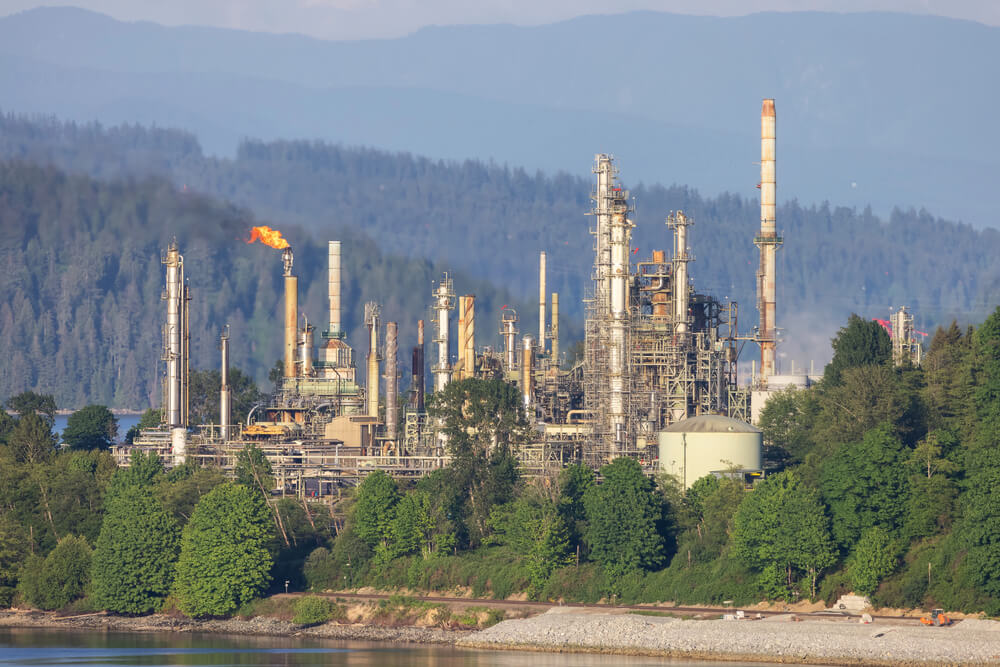
Renewable energy presents Canada with opportunity to reduce dependence on global oil markets and build a more resilient energy system at home
With the war in Iran, a precarious ceasefire and an unpredictable President Trump, there has been a lot of talk about oil recently – and rightly so. Global prices are rising and volatile, with the largest monthly jump in gas prices in six decades. Consumers are paying the price at the pump. The national average price of gas recently reached about $1.81 per litre.
For a country like Canada, the world’s fourth-largest oil producer, it seems counterintuitive that we are so affected by supply disruptions elsewhere in the world. With all our resources and fossil-fuel companies, shouldn’t Canadian gas prices be more insulated from global shocks?
The reality is more complicated.
Oil is traded as a global commodity, with prices largely set by global supply and demand. Even when Canadian production remains steady, producers sell oil at the global market price. If supply is disrupted in the Middle East, global supply tightens and prices rise everywhere – including in Canada.
Canada’s own infrastructure reinforces this dependence.
Much of Eastern Canada imports crude oil from international markets, while more than 80 per cent of Western Canadian crude is exported, primarily to the United States. Pipelines tend to run south rather than east across the country.
Meanwhile, Canada has relatively few refineries, which convert crude into gasoline. When supply disruptions occur or demand rises, these refineries operate near capacity, and gasoline prices can rise faster than crude prices.
The result is that while Canada is a major oil producer, Canadian consumers see little benefit. The current system may work well for oil markets and producers, but it leaves households exposed to the same global volatility as everyone else. Especially given the uncertainty of today’s world, the country needs a long-term plan the insulates Canadians from the shocks of global instability.
Amid all the discussion about crude, however, one major element is missing from the conversation: renewable energy.
Renewable energy presents Canada with an opportunity to reduce its dependence on global oil markets and build a more resilient energy system at home.
Oil markets hinge on geopolitical chokepoints such as the Strait of Hormuz, through which roughly one-fifth of the world’s oil supply passes. Solar farms and wind turbines, by contrast, do not depend on naval security in the Persian Gulf.
Canada is already well positioned to take advantage of this shift. Roughly two-thirds of the country’s electricity generation comes from renewable sources, largely hydroelectric power, with wind and solar growing quickly.
The real challenge is not generating clean electricity – it’s using it.
Electricity still represents only about one-fifth of Canada’s total energy consumption. Transportation alone accounts for roughly 20 per cent of Canada’s energy demand, and nearly all of it relies on gasoline or diesel. In fact, transportation represents about 60 per cent of Canadian oil consumption.
Reducing oil dependence therefore requires more than simply adding renewable energy. It requires electrifying the sectors that currently run on oil – particularly transportation and building heating – and powering them with clean electricity.
Electricity demand in Canada is expected to more than double by 2050. Meeting that demand will require a significant expansion of the electricity system: more wind and solar generation, new hydro capacity, grid-scale storage and expanded transmission networks to move power across regions.
The scale of investment required is substantial. Estimates suggest that building the clean electricity system needed for a net-zero economy could require $140 billion in annual investment, totalling approximately $3.5 trillion by 2050. At first glance, those numbers may seem staggering. But they must be understood in context.
In 2024 alone, the Canadian government supported the oil industry with at least $29.6 billion, driven by the Trans Mountain pipeline. Over time, those expenditures represent enormous flows of capital into a commodity market defined by volatility and geopolitical risk.
Renewable energy infrastructure works differently. Wind turbines, solar farms, transmission lines and charging networks require significant upfront investment, but once built, they operate with essentially zero fuel costs. The sun and wind do not experience supply shocks. They do not depend on shipping lanes or geopolitical alliances.
In effect, renewable energy converts energy systems from fuel-based economies into capital-based ones. That distinction matters during moments like the present. Expanding renewable energy is therefore not only a climate strategy – it’s also an energy security strategy.
The irony of every oil crisis is that it highlights the problem without advancing the solution. Each price spike reminds us how exposed modern economies remain to fossil-fuel volatility. But it also underscores an overlooked reality: the necessity to invest in the infrastructure of a different energy system, one unaffected by global instability or the whims of leaders of other countries.
Our security depends on it.
Photo courtesy of DepositPhotos