

It’s time to ban claims that they do
Now that the Federal Court of Appeal has upheld the federal government’s authority to ban single-use plastic items, it is time for Ottawa to take the next step and close the door on misleading claims that so-called “compostable” products and packaging belong in home or backyard composters.
Composting is a vital way to improve soil health, support food security and fight climate change, but its success depends on public trust in composting systems.
However, actions by some manufacturers, packaging suppliers and certification bodies to introduce “home compostable” claims in Canada – claims that do not necessarily hold up in real-world conditions – threaten to undermine public trust and participation in the entire organics recycling system.
Not only must companies and their industry partners refrain from these claims, but the federal government must immediately intervene to ban the labelling of products or packaging as “home” or “backyard” compostable.
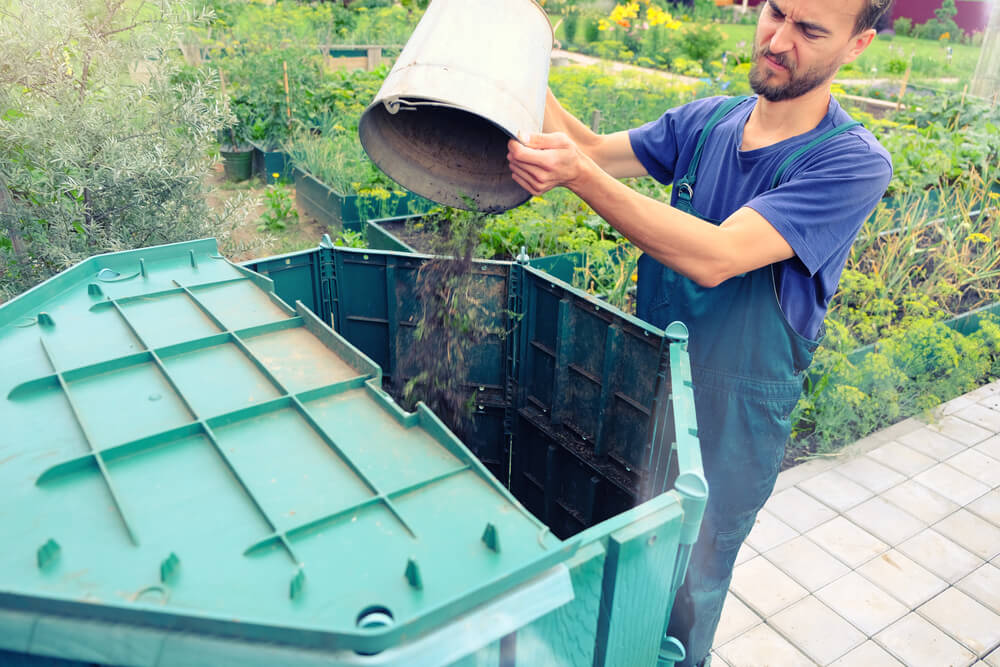
While composting is not new – Canadians have been using backyard composters to turn food scraps and yard waste into compost for their yards for decades – it is increasingly recognized as a crucial solution for reducing the amount of organic waste filling landfill sites.
As governments adopt stricter waste management regulations, companies are increasingly using materials deemed “compostable” to make products and packaging.
The problem is not all products and packaging labelled compostable truly are and there are no enforceable rules in Canada preventing these claims.
At the Compost Council of Canada, we are a national leader in spearheading certification standards for industrial composting, but we have consistently opposed certification as inappropriate for backyard composting due to our climate and composting realities, and federal regulatory direction.
Current home‑compostable certification programs are not designed for Canadian real-world conditions. Current international standards are based on laboratory testing that uses ambient temperatures of a minimum of 20C for up to 180 consecutive days.
This does not match weather conditions anywhere in Canada where outdoor temperatures simply do not get high enough for long enough to fully break down items claiming to be backyard compostable.
While these items might decompose in a few weeks or months in an industrial composter – where temperature, moisture and aeration are better controlled – they often remain largely intact in backyard composters even after many months or even years.
And, unlike lab testing, in the real world these items are unlikely to be in pristine condition when put in backyard compost bins. Instead, they might contain traces of food waste – crumbs or meat or dairy scraps – not meant for backyard composting, since home systems don’t usually reach high enough temperatures and could attract unwanted critters.
There is also a risk that consumers might assume that all items of a certain type – like plates or cups – are backyard compostable if one brand is labelled that way even if the others are not.
Introducing home compostable claims that do not reflect real-world conditions jeopardizes decades of progress in promoting composting as a meaningful way to process organic materials and create quality compost.
It also risks eroding consumer confidence in composting overall – hindering participation and damaging the reputation of both municipal-industrial and home-composting programs.
Composting realities in Canada also call into question whether home compostable claims on packaging even make sense.
Backyard composting is declining as municipal curbside organics recycling programs expand and as an increasing number of Canadians live in multi-unit residences – places that are less likely to have backyard composters.
The federal government has also previously indicated that it plans to prohibit labelling that uses home or backyard compostable claims.
The problem is it put draft regulations on hold pending the Federal Court ruling. This delay has left a gap that undermines the integrity of compostable packaging and product claims.
It is imperative that the government follow through on its 2023 initiative to fix weak or non-existent regulatory oversight on false labelling claims to prevent home or backyard compostable claims.
Composting is a hands-on way for people to take part in the full cycle of organics recycling, but if misleading backyard compostable claims shatter public trust – and participation – in it, Canada’s entire organics recycling system is at risk.
Industry partners must step away from making home compostable claims on products and packaging, and the federal government must implement regulations to ensure that they do.
There is too much at stake.
Photo courtesy of DepositPhotos