

Access to lifesaving drugs is a matter of national security
Sir Frederick Banting, alongside fellow Canadians Charles Best and James Collip (under the direction of John Macleod) changed the world from a lab in Toronto.
Now, millions of people in Canada wake up every morning dependent on diabetes medications – which includes insulin, a lifesaving medication he and his team discovered right here in Canada. Sir Banting is a Canadian hero.
Yet today, we do not manufacture a single vial of insulin in Canada That is not a failure of science; that is a failure of will. Despite insulin having been discovered here, Canada remains entirely dependent on foreign manufacturers. And when shortages occur, we have no enforceable mechanism to prioritize Canadians.
This is not just an issue of accessibility and affordability – it’s a national security issue.
Recently, I testified at a hearing for the House of Commons’ Standing Committee on Health looking into Canada’s pharmaceutical sovereignty; it was too easy to provide examples of where Canada has displayed a systemic vulnerability with direct consequences for Canadian health security.
In 2024, Canada faced a critical shortage of injectable glucagon – a lifesaving emergency treatment for severe hypoglycemia. Emergency importation from the United States was required and still is. But that is a short-term workaround, not a resilience strategy.
That shortage was a warning – a stress test we failed.
And as recently as last month, a small group of Canadians living with type 1 diabetes were about to lose access to animal insulin – the only kind their bodies can tolerate – as the foreign company that manufactures and distributes it in Canada was about to discontinue it altogether.
It took those families going public with their story in the media for a solution, albeit still a temporary one, to be reached.
Health security means availability. Supply disruptions or allocation decisions made abroad could both undermine Canada’s nascent pharmacare program and leave vulnerable populations without access to covered medications.
Pharmaceutical sovereignty is not about isolation. It is about resilience. It is about preparedness. And it is about the duty of a nation to protect its people.
Without domestic manufacturing capacity, Canada has no mechanism to prioritize its own population’s needs over international demand. We have no control. We have no leverage. And we have no guarantee that when the next crisis hits that our patients will have access to the medications they need.
Now President Trump’s threat of tariffs on pharmaceuticals, as well U.S. State Importation Programs are actively competing for Canadian-distributed medications.
As U.S. states seek lower-cost drugs from Canada, they create competing demand for products manufactured or distributed through Canadian channels – diverting supply away from our people and creating unpredictable shortages.
Global supply chain fragility means decisions made in foreign boardrooms, during crises we do not control, directly impact the health of Canadians.
The good news is that we already have a guide map. Canada’s new Defence Industrial Strategy explicitly recognizes life sciences as a critical sector.
The Life Sciences Fund provides direct policy instruments to support domestic pharmaceutical manufacturing – the same way we invest in critical minerals and defence capabilities to protect national security. Canada should apply this existing framework to essential medicines – because access to lifesaving drugs is a matter of national security.
Specifically, the federal government must:
- Designate insulin, glucagon, and essential diabetes therapies as critical medicines under a formal pharmaceutical sovereignty framework aligned with the Defence Industrial Strategy.
- Leverage the Life Sciences Fund to provide capital investment for domestic insulin manufacturing facilities, procurement guarantees and long‑term supply contracts that create predictable demand.
- Establish public‑private partnerships, with government providing strategic investment and guaranteed procurement – the same model that already works for defence and critical minerals.
- Create strategic reserves for essential diabetes medicines to buffer against supply disruptions.
- Coordinate federal and provincial purchasing to create sufficient market scale for domestic manufacturers.
- Implement safeguards to protect Canadian supply from competing international demand.
The House of Commons’ study on pharmaceutical sovereignty provides a critical opportunity to transform policy into action – and to ensure that Canada never again depends entirely on foreign manufacturers for medications discovered, developed and relied upon by Canadians.
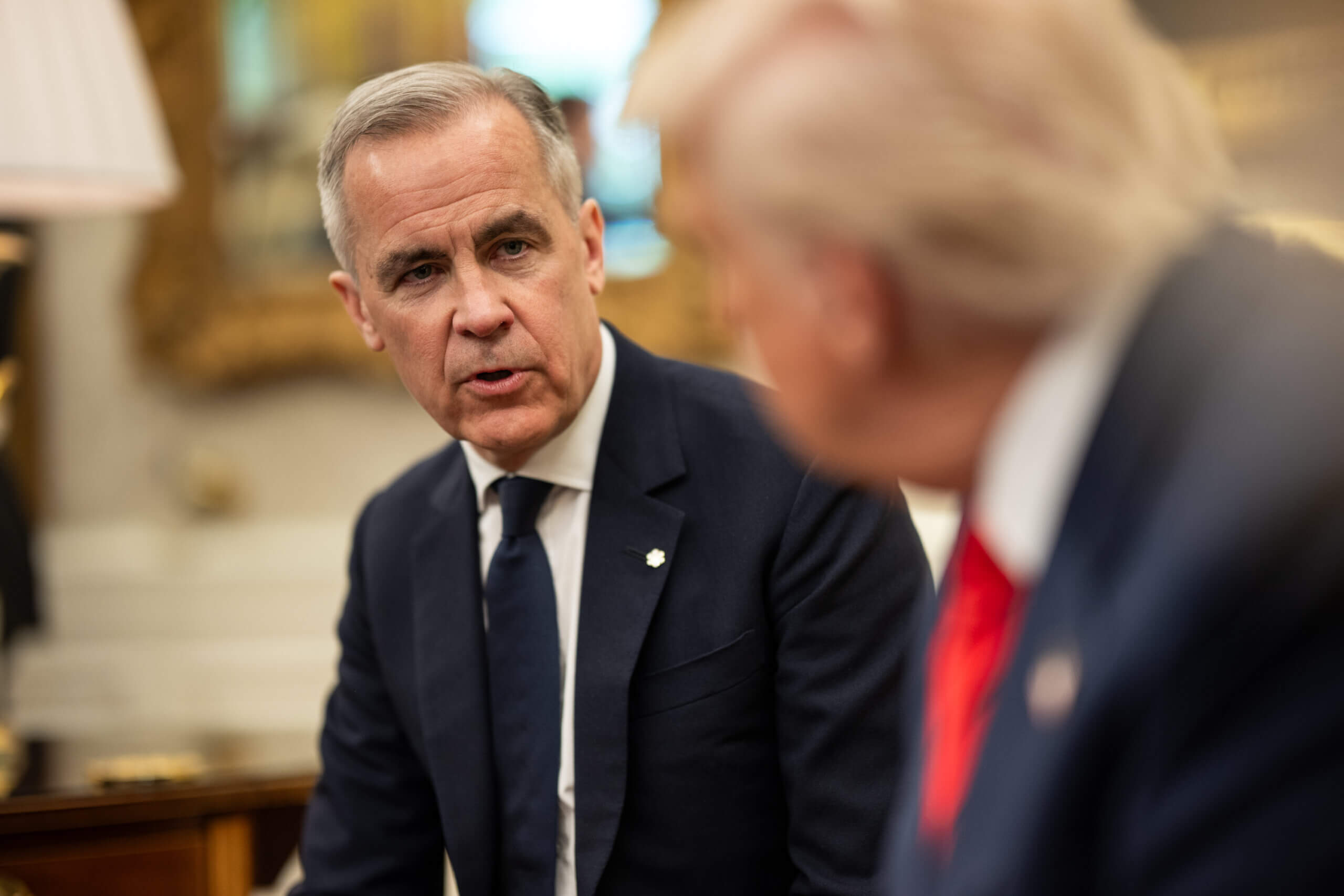
Photo courtesy of The White House, Public domain, via Wikimedia Commons