

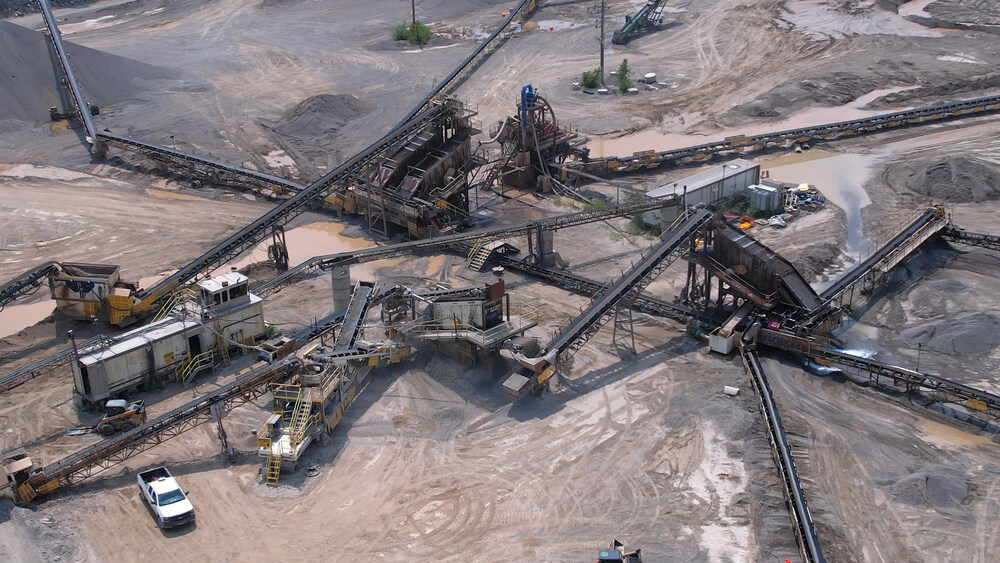
The federal government defines “critical minerals” so broadly that it could fuel climate chaos rather than curb it
Solar panels. Wind turbines. Heat pumps. These are key technologies in the transition to a low-carbon economy. But their production requires minerals that are in tight supply globally. Solving this problem is one of the key goals of the federal government’s Critical Minerals Strategy. That strategy seeks to ramp up mining of minerals the government designates as essential for new technologies – some of which are used in clean energy – through measures like government investments and tax breaks.
The Minister of Energy and Natural Resources has even declared that “Canada’s mining leadership is also climate leadership,” in line with Ottawa’s efforts to frame its Critical Minerals Strategy as a climate solution.
On the surface, the Strategy might look promising as a means to expand our capacity to address climate change. However, the federal government defines “critical minerals” so broadly that much of this new mineral supply could be channeled into activities that fuel climate chaos rather than curb it.
The expansion of AI and military capacity are just two examples. These rely on some of the same minerals needed to scale up renewable energy. They are also named by the federal government as objectives of its critical minerals efforts.
Military end use is especially likely. The government is investing heavily in expanding Canada’s military capacity and wants to source much of the mineral supply it needs to do so domestically. Ottawa also aims to increase defence exports by 50 per cent.
The U.S. Department of War is also a major consumer and financial backer of Canadian critical minerals. In 2024, the Pentagon announced a U.S. $8.3-million grant to Lomiko Metals for a proposed open-pit graphite mine in Quebec, which faces overwhelming local opposition.
It is also trying to secure stockpiles of tungsten, which is used in munitions and vehicle armour, with investments of more than CA$42-million in Northcliff Resources’ Sisson mining project in New Brunswick and Fireweed Metals’ Mactung project in the Yukon.
Meanwhile, the major U.S. investor in Torngat Metals’ rare earth elements project in northern Quebec is Cerberus Capital Management – a firm closely linked to the current U.S. administration and its Department of War, as recently exposed by The Fifth Estate.
Expanding military capacity poses significant climate threats. First, we cannot achieve a rapid transition to renewable energy if the required minerals are diverted into making and stockpiling armaments. The weapons production process is also notoriously polluting.
Then there is the climate cost of military activity itself.
Although data on military emissions are difficult to get, estimates suggest that the global military carbon footprint is greater than that of the aviation and shipping industries combined. The U.S. military is a particularly egregious carbon emitter. Its estimated emissions in 2022 exceeded those of 150 individual countries.
That other countries could increasingly use Canada’s minerals to build up their armed forces carries human rights implications beyond those tied to climate change, of course. The possibility that we may contribute to wars of aggression and genocide must give anyone pause – as should the long-term social, economic and health impacts of the atrocities of war, which also leave survivors more vulnerable to harmful effects of climate chaos.
We must also consider the risks to those communities targeted for mineral extraction or processing. Under the new Building Canada Act, the government can declare specific projects to be in the national interest, and limit or even waive requirements for environmental assessment and Indigenous consultation.
Frontline communities will pay the costs.
We must reject the federal government’s greenwashing of its Critical Minerals Strategy and recognize the real climate threats posed by our government’s plans.
We cannot afford to delay meaningful climate action any longer. We must prioritize low carbon technologies and ensure that mined minerals are used to support a rapid and robust transition away from fossil fuels.
Mineral sobriety, meaning using what we already have and mining only for what is necessary, with true Indigenous and community consent, is our best shot at mitigating the harm of climate chaos for everyone.
What could be more in our national interest?
Photo courtesy of DepositPhotos