

This country’s economic strategy must include the health of the workforce, and that requires accountability for how funding is spent.
Canada’s premiers spent their July meeting in Charlottetown, P.E.I., talking about the economy, internal trade, and nation-building projects. The International Monetary Fund says tearing down our internal trade barriers alone is worth $210-billion, close to seven per cent of GDP, and the premiers are right to chase it.
Remember that number. Seven per cent.
Health made the agenda, too, as a demand for more money, the way it always does.
The premiers warned of a fiscal cliff as health agreements begin to expire next year. And their closing communiqué asked for one thing above all: increased unconditional and flexible federal funding.
Unconditional—their word. A bigger cheque, with nothing said about what the cheque is meant to buy.
That was July. Since then, everyone has discovered accountability. Advocates want strings. Provinces call them an intrusion. And first ministers handed the file to their health and finance ministers to sort out long-term funding and productivity. For once, the money people and the health people share a file.
Good. Now ask the two questions hiding inside that assignment: accountable for what? Measured by whom?
I’ve been a family physician for more than three decades. I’ve watched patients I’ve known for years leave work because illness left them no choice.
The strain on a household is easy to see from the inside. The strain on the economy is the same strain, spread across millions of households.
The Canadian Institute for Health Information (CIHI) reports that 5.7 million Canadian adults had no regular health-care provider in 2024. CIHI’s own conclusion deserves a second read: closing the gap takes a system-wide approach, beyond adding more health-care professionals.
The United Kingdom has put a price on this. A government review found that ill health is now the biggest reason working-age Britons leave the workforce, costing the state 212-billion pounds a year. Seven per cent of GDP.
The same seven per cent our premiers are chasing through internal trade, Britain is losing to poor health. What’s Canada’s number? No minister at that table can say.
The real return doesn’t sit in bricks and mortar. It sits with the family physician who holds the whole picture of a patient over years, working with the nurse, the pharmacist, the social worker, and the specialists, pulling what each contributes into one integrated care plan. That’s the work that manages a health problem early, before a permanent exit from the workforce becomes inevitable.
Provinces already report to Ottawa against a set of indicators. But an indicator only tells you where you stand, not whether you’re moving in the right direction. Thirteen jurisdictions each spend health dollars using their own ideas of what good primary care looks like, without a common reference point. That’s about to change.
A revised national standard for primary health care went through public review this past spring, shaped by provinces, patients, researchers, and clinicians. It describes what good primary care looks like anywhere in Canada: comprehensive, co-ordinated, and continuous, delivered by a team built around the patient.
It’s a reference point every jurisdiction can use: a North Star. Maybe it’s this standard. Maybe something better comes along. But we need something, and this one is Canadian, built by consensus, and ready.
So here’s my ask of the health and finance ministers now holding this file. When you renew the agreements, give the money an aim. Point it at a shared definition of good primary care, the way provinces already build to the National Building Code: no federal mandate, each one designing for its own context at its own pace. Then measure against it, and report publicly. The money is for Canadians. Let them judge.
Money aimed at good primary care buys health, and health keeps people working. That is a growth strategy sitting in a health file. The seven per cent we chase through trade is there to be won back from illness. Same dollars, two returns.
Our leaders came to the birthplace of Confederation to build a more competitive country. The health of the people who will build it belongs inside that plan, not beside it. They call next year a fiscal cliff. It could just as easily be Canada’s opening. The North Star is ready. The question is whether anyone at the table will look up.
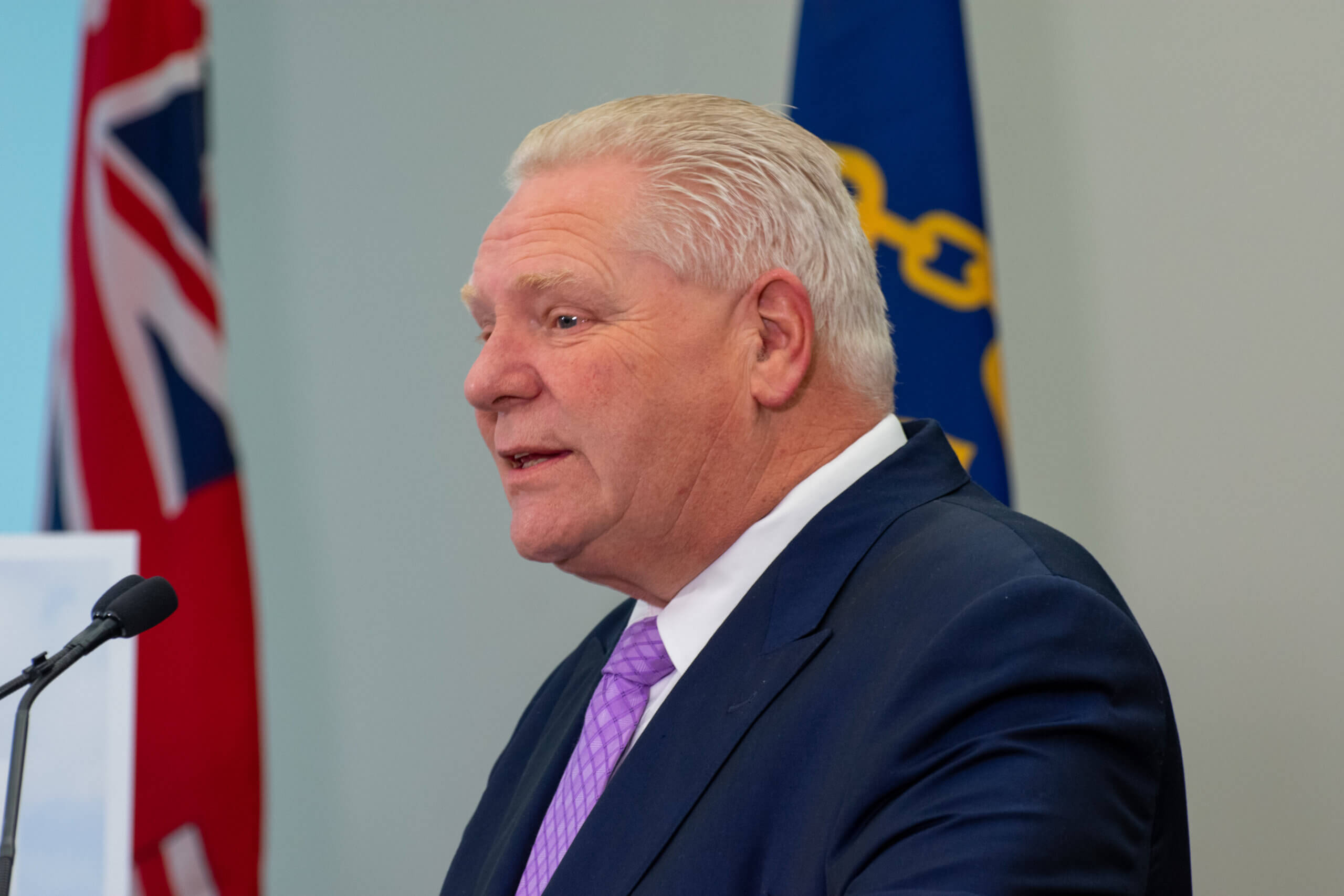
Photo courtesy of Joey Coleman, CC BY 2.0 <https://creativecommons.org/licenses/by/2.0>, via Wikimedia Commons