

Consider this situation: you are walking down the street when someone collapses, as if suddenly dead. You and another passerby recognize the signs of cardiac arrest — their heart has suddenly stopped. Without immediate help, this stranger will die. While the other person starts CPR, you call 911.
So far, it’s a scary situation but under control.
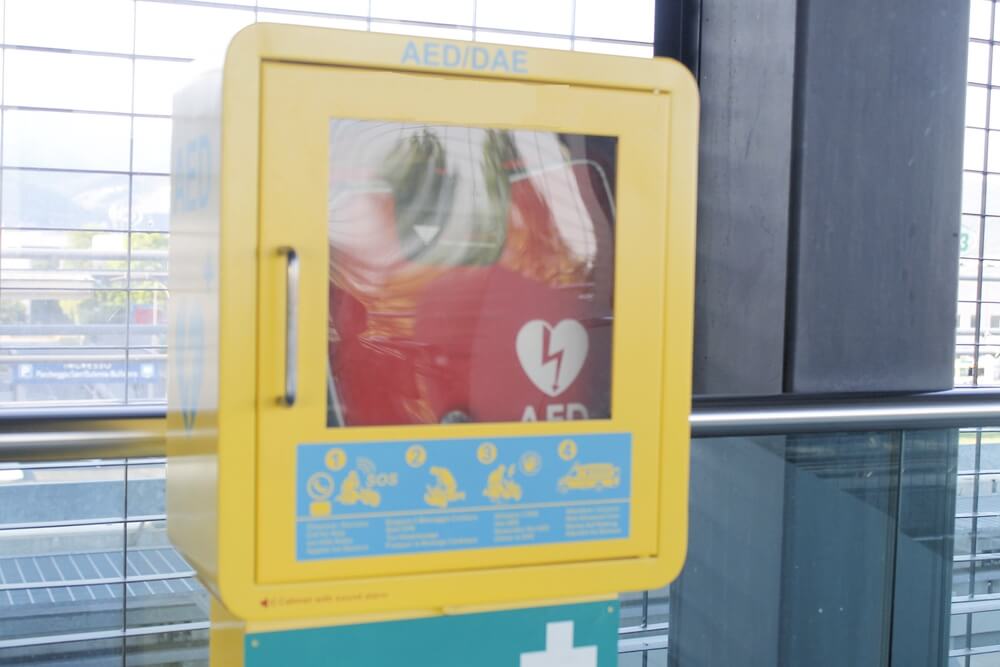
You tell the 911 operator to send an ambulance right away but know that it will take time to arrive, so you ask if there is an automated external defibrillator (AED) nearby. There are many AEDs across the province and while you don’t know their exact locations, you do know having one could save this stranger’s life.
Then comes the really tough part: the 911 operator says she is sorry, unfortunately she can’t help you. She knows where you are but has no way of knowing where the nearest AED might be. You are on your own to find one. You and others run around aimlessly but can’t find one. By the time the ambulance arrives, there is nothing left to be done. You all have tried your best to help this stranger but to no avail. The person has died.
This, unfortunately, is the current situation in Newfoundland and Labrador. Almost anywhere else in Canada, the 911 operator would have easy access to a registry of AED locations in the province. Within seconds, the operator would tell you where the closest one is, saving critical time. If the simple-to-use AED is available within minutes of the collapse, there is a far better chance the person will survive.
Our health system has many needs; we all know that. But creating a province-wide AED registry is a simple and low-cost project that could and should be done right away. The delay is because it wasn’t deemed feasible when 911 calls were being handled on a local basis. However, 911 services are now centralized, as well as being modernized to ultimately be able to automatically know a caller’s location.
The technology to create the registry is readily available and being used successfully in other provinces, meaning there is no need to re-invent the wheel. Nova Scotia has had a registry for almost 15 years and now has some 2,200 AEDs listed throughout the province.
It’s not just 911 operators who will benefit. A central registry would allow anyone to have an app on their phone that, using one’s location, would provide the closest AED with just a click, saving more precious seconds.
There are many AEDs available in Newfoundland and Labrador — if you can find them. Along with those in public facilities such as arenas and fire departments, Heart & Stroke has been active in recent years placing AEDs throughout the province, in communities large and small. Many private businesses, and even homes, also have them. AEDs are out there, but we need to be able to find them in a hurry when the need arises. A comprehensive registry would also serve the valuable purpose of identifying the gaps where AEDs are still needed.
Cardiac arrest is not rare. It can happen to anyone of any age, anywhere. Every year, approximately 60,000 people in Canada experience out-of-hospital cardiac arrest — one every nine minutes. Half are under age 65. For every minute that passes without CPR or using an AED, the probability of survival declines by 10 per cent.
As Newfoundland and Labrador heads into its election, we hope all parties will embrace the idea of quickly creating a provincial AED registry so lives can be saved. Plans and budgets for the registry must also include funds for a public awareness campaign so all those with an AED will add it to the registry to make it as complete as possible. This is particularly vital in small communities with few public buildings and where emergency care can take time to arrive.
An AED registry would be an important step towards creating heart-safe communities, adding a modern twist on the centuries-old legacy of us helping, and saving, each other. A provincial wide AED registry would also be turning one of today’s health system challenges into something that could result in some very welcome happy endings.
Photo courtesy of DepositPhotos