

Canada’s greatest economic assets are not only steel, asphalt and concrete. A stronger Canada begins and ends with healthier Canadians
Ottawa is betting that billions of taxpayer dollars spent on steel, asphalt and concrete will secure Canada’s economic future and prosperity. Through the $51 billion Build Communities Strong Fund, the federal government is paying for roads, bridges, water systems and transit to boost productivity and attract capital from Europe and Asia.
As the shovels hit the ground from Halifax to Vancouver, Canadians should be asking themselves: What good does it do to build a stronger country if we are not building healthier Canadians?
The fund’s $5 billion allocation for health infrastructure is welcome news as many of our hospitals and long-term care homes across the country are showing severe signs of aging, and modern care centres are much needed. But pouring concrete for new facilities is not the same as building a healthy population.
A ribbon-cutting at a modern hospital does not guarantee you see a family doctor when you need one, keep a rural emergency department open overnight, or shorten the wait for a knee replacement keeping someone off the job or robbing a retiree of their independence. New hospital walls don’t prevent chronic disease, cover the cost of prescribed medications or get a struggling teenager in front of a mental health counsellor before a crisis hits.
Canada needs a vision of Build Canadians Strong to match its infrastructure build-out.
A healthy population is the foundation of economic strength. Canada will not close its productivity gap with other countries when its workers are waiting for basic care or stepping back to look after their aging parents. When health breaks down, the impacts spill into workplaces, classrooms, family budgets and public finances.
Canada already has the ingredients for leading the world in health outcomes, with an educated workforce and universal access to hospital and physician care. For too long, federal and provincial governments have treated healthcare as an emergency repair shop for illness rather than a system built for keeping people healthy.
This is not an argument against the Prime Minister’s infrastructure agenda, but a call for looking beyond construction projects. Strengthening primary and preventive care must come first. With federal backing, provinces need to catch chronic illness early using clinics where doctors, nurse practitioners, pharmacists, dietitians and physical therapists work under one roof, relieving pressure on overcrowded emergency rooms.
Mental health and addiction support must be treated as everyday healthcare. Children, youth, working adults and seniors need access to community counselling and early intervention, rather than waiting for an emergency to offer help.
Keeping seniors active and independent requires the same mindset. Alongside homecare and therapies that keep frailty at bay, seniors need accessible community programs and transit options that help them live at home.
The fund already recognizes that community infrastructure shapes daily life, backing clean water upgrades in New Brunswick and Manitoba as well as recreation centres in Coquitlam and arenas in Charlottetown. But federal, provincial and municipal partners must connect the physical infrastructure built by the fund with the everyday foundations of health: safe housing, clean air, affordable nutritious food and community spaces that combat social isolation.
For the fund’s investments to matter, provinces must have their universities, colleges and provincial licensing bodies coordinate to train, recruit and retain the doctors, nurses, paramedics and care aides needed to staff the facilities that Ottawa is helping to build. Even then, success of Build Canadians Strong should not be measured by new hospital beds or filled emergency department shifts.
Provincial premiers should pair their infrastructure deals with the federal government with health outcomes that matter to Canadians: shorter waits for family doctors and mental healthcare, healthier seniors staying in their own homes and stronger communities.
The goal is not to replace the fund’s infrastructure spending with healthcare spending, but to make the two work together. Canada’s greatest economic assets are not steel, asphalt and concrete. A stronger Canada begins and ends with healthier Canadians.
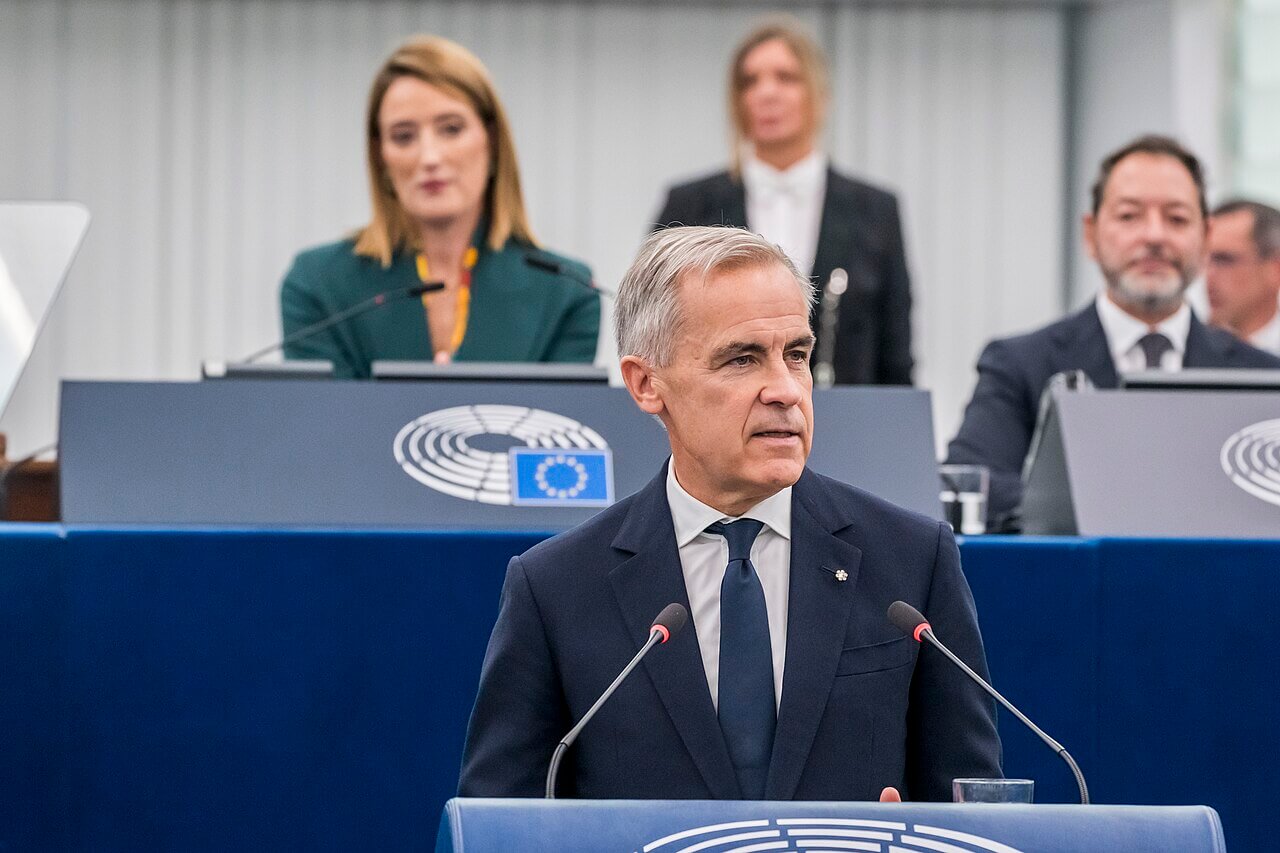
Photo courtesy of <a href=”https://commons.wikimedia.org/wiki/File:Mark_Carney_speaks_at_the_European_Parliament_plenary_session_06.jpg”>© European Union</a>, <a href=”https://www.europarl.europa.eu/legal-notice/”>European Parliament</a>, via Wikimedia Commons